WE RESPOND TO YOUR NEEDS 414-271-1440
Recent Blog Posts
Avoiding Common Winter Slip and Fall Injuries
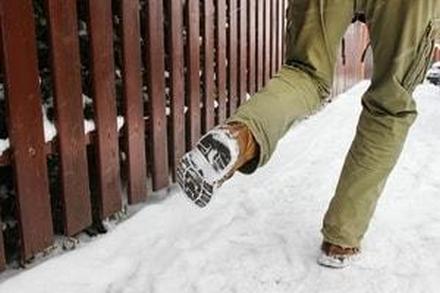 The winter season is upon us — temperatures are dropping, cold winds are blowing, and snow and ice are likely to build up on every outdoor surface. As you prepare for cold weather by wearing warm clothing, making sure your house is insulated, and keeping winter supplies on hand, also be aware of the increased danger of slip and fall injuries caused by slippery walking surfaces.
Common Winter Injuries
Snow and ice on roads, sidewalks, and driveways present a major hazard, and melting snow and ice can also lead to wet, slick floors, creating additional dangers nearly everywhere people will be walking in the winter. These conditions can lead to a wide variety of injuries, including:
- Head injuries - Slipping on an icy sidewalk or wet floor and hitting one’s head on the ground, pavement, or a nearby object can result in traumatic brain injury, which can be very serious. Symptoms of brain injuries do not always show up right away; therefore, be aware of any headaches, nausea, dizziness, memory loss, confusion, or loss of consciousness.
Applying for a Wisconsin Liquor License for Your Business
 The sale of alcoholic beverages can be a great way for a store, restaurant, bar, or nightclub to generate revenue. However, before doing so, the establishment must obtain a liquor license. In Wisconsin, the requirements for obtaining this type of government license are very strict. Business owners can avoid being penalized for a license violation by following the correct procedures.
Types of Wisconsin Liquor Licenses
In Wisconsin, liquor licenses are issued by local cities, towns, or villages. While different municipalities may have their own specific types of licenses, they generally fall into one of three categories:
- Class “A” licenses allow for the retail sales of alcoholic beverages to be consumed off the business’s premises. These licenses can allow the sale of fermented malt beverages (beer), liquor and wine, or cider beverages.
KNOW YOUR RIGHTS: If I Am an Airline Passenger, What Happens if I Need to Use the Facilities When the Seat Belt Sign is On?
 By Attorney Ray Dall’Osto
On April 18, 2017, Kima Hamilton was removed from a Delta Airlines flight from Atlanta to Milwaukee because he had to go to the bathroom while the plane was on the tarmac. Mr. Hamilton and his attorney have filed a lawsuit in federal court alleging that how he was treated was unreasonable and was significantly different from how other similarly-situated passengers were treated, because of his race.
The lawsuit alleges that Mr. Hamilton had to urinate after the plane left the gate, and was told by crew members he would have to wait otherwise the plane would lose its spot in line. After telling the flight attendant it was an emergency and using the restroom, the plane returned to the gate and Mr. Hamilton was escorted off the plane by an airline employer and was questioned by the FBI.
In another case in 2015 involving a flight into O’Hare, the regional jet did not have a functioning toilet and passengers were without facilities for almost three hours, causing great discomfort and distress.
Avoiding Car Accidents and Staying Safe During Winter Weather
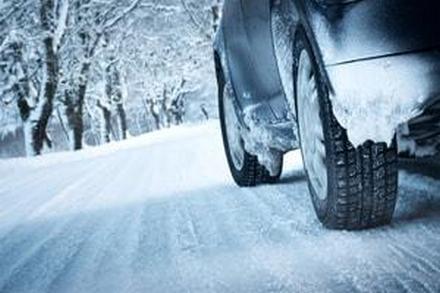 As the winter season begins in earnest, many of us are preparing for snow, ice, and cold weather. Along with having warmer clothing ready and making sure that our homes’ heating systems are in working order, it is also important to be aware of the increased danger of car accidents that drivers face when driving in winter conditions.
Top Causes of Winter Car Accidents
Every year, more than 1,300 people die and more than 116,000 people are injured in car crashes that occur on roads that are snowy, icy, or slushy. These conditions can make roads especially dangerous, and accidents often occur because of:
- Icy roads - Ice can often be difficult to see on roads, especially when it covers the road in a thin layer. This type of “black ice” is very slippery, and drivers often do not account for it during winter weather, leading to accidents when they are unable to stop or turn in time.
Brendan Dassey Loses Federal Court of Appeals Review by 4-3 Decision
 On December 8, 2017, after twice prevailing in his habeas corpus case at the federal District Court and before a three judge panel of the Seventh Circuit Court of Appeals in Chicago, an en banc (entire) Seventh Circuit issued a 4-3 decision reversing itself, and despite the facts and applicable law, denied Brendan Dassey habeas relief. The next step for Mr. Dassey is the United States Supreme Court.
The 4-3 majority opinion in Dassey v. Dittmann held that while the record contained factors that would support finding that his confession was involuntary, including the fact that the defendant was 16 at time of confession, that he had IQ in low 80s, that his confession contained inconsistencies, and that interrogators gave broad assurances that honesty would produce leniency, the slim 4-3 majority found that this was not enough. The slip opinion of the Seventh Circuit can be found at http://media.ca7.uscourts.gov/cgi-bin/rssExec.pl?Submit=Display&Path=Y2017/D12-08/C:16-3397:J:Hamilton:aut:T:fnOp:N:2074184:S:0.
How Do I Appeal the Ruling in My Criminal Defense Case?
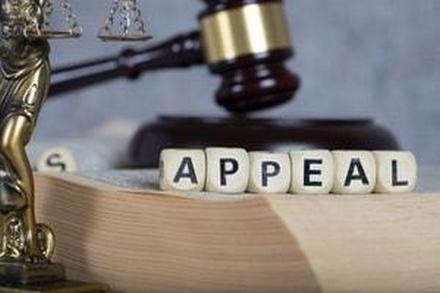 When you are facing criminal charges, the outcome of your trial will have a major impact on your life. Unfortunately, errors sometimes occur during criminal trials, resulting in unjust convictions or incorrect sentences. If you are unhappy with the results of your criminal trial, you have the option to appeal.
The Wisconsin Appeals Process
After the circuit court has issued its final judgment in your trial, you must file a Notice of Intent to Pursue Postconviction Relief within 20 days. This Notice informs the court that you plan to appeal the case. Within 30 days after filing the Notice of Intent, you must request a copy of the court transcript(s). The court clerk will serve you with a copy of the transcript(s) within 60 days.
Within 60 days after receiving the transcript(s), you must file a Motion for Postconviction Relief. This motion may argue that the conviction or sentence violated the U.S. or Wisconsin Constitutions, that the court did not have jurisdiction to hear the case, or that the sentence exceeded the maximum penalty allowed by law. The circuit court will rule on this motion. If it is denied, you can file a Notice of Appeal within 20 days.
Book Review on the Continuing Steven Avery Case – Illusion of Justice
 Steven Avery’s request for a new trial was again rejected November 28, 2017, by Sheboygan County Circuit Judge Angela Sutkiewicz. Avery had asked the judge to reconsider her October 3rd decision rejecting his request for a new trial.
Avery’s current post-conviction attorney said that she had new testimony and evidence to present to the court, which warranted a new trial. However, Judge Sutkiewicz found that she had no basis for reconsideration and reversal of her October 3rd decision denying such relief. Avery’s attorney is seeking an appeal of the ruling with the Wisconsin Court of Appeals.
An excellent, inside view of Steven Avery’s case, his trial and the disputed forensic evidence used to convict him is found in Jerry Buting’s 2017 book, Illusion of Justice. The review of this book written by Ray Dall’Osto in the recent NACDL Champion magazine, can be read at https://www.nacdl.org/
Can the State Legislature Lower the Legal Drinking Age in Wisconsin?
 By: Attorney Steven McGaver and Law Clerk Kenneth Baker
Some Wisconsin lawmakers recently announced a proposal to lower the legal drinking age to 19 years old. This proposal has one significant condition: federal highway funding cannot be withheld from the state.
In 1984, Congress passed the National Minimum Drinking Age Act (NMDAA). The act created a uniform age for the legal consumption of alcohol at 21. If states refused to raise their legal drinking age, the Department of Transportation would withhold federal highway funding. Eventually, all 50 states passed legislation to raise the drinking age to 21, including Wisconsin on September 1st, 1986.
Soon after the passing of the NMDAA, its constitutionality was called into question. The United States Supreme Court addressed the matter in South Dakota v. Dole, which determined “to what extent does Congress have the power to withhold federal funding from the states.” The Court ultimately upheld the NMDAA and found that Congress can withhold federal funds from the states if it meets five requirements. The first is that the funding must promote "the general welfare." Second, the condition [placed upon the states] must be unambiguous. Third, the condition should relate "to the federal interest in particular national projects or programs." Fourth, the condition imposed on the states must not, in itself, be unconstitutional. And finally, the condition must not be coercive. If congress could pass this five part test, it could withhold federal funding to the states.
Wisconsin Embezzlement: A Brief Overview
 Theft can take many forms, from seemingly minor offenses like shoplifting to major financial crimes involving millions of dollars, high-value real estate, and/or banks or other organizations. While the news often focuses on bank fraud, securities fraud, and other high-profile white collar crimes, another form of theft that is common in Wisconsin is embezzlement.
Embezzlement Laws in Wisconsin
Embezzlement is typically defined as the theft of money or property by an employee from his or her employer. However, it can also include the theft of property that is placed in one’s trust by someone else, such as a friend or family member.
While Wisconsin statutes do not actually use the word “embezzlement,” they do have a two-fold definition of theft that is similar to embezzlement:
- The person has possession of someone else’s “money, security, instrument, paper or writing” because of his or her business, employment, or role as a trustee, and
How Do Hit and Run Accident Victims Hold Drivers Accountable?
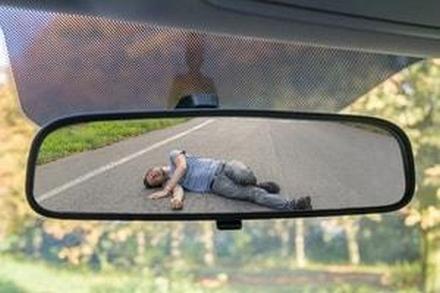 Getting into a car accident can be a traumatic experience, and dealing with the resulting medical treatments, vehicle repairs, police reports, and insurance claims can be overwhelming in even the best cases. This process becomes even more difficult in the case of hit and run accidents, since victims will have difficulty determining the identity of the driver who was involved in an accident and holding him or her responsible for the damages caused.
Hit and Run Accidents Under Wisconsin Law
In Wisconsin, a driver who strikes a person or vehicle is required to stop his or her vehicle, investigate the scene of the accident, share his or her contact information and vehicle registration number with the other party, and provide any necessary medical assistance to anyone who was injured in the accident. Failure to do so is a felony.